


UAV Spraying Technology Trends in 2026
A steep gully, a wet paddock edge, a shelterbelt choked with blackberry, or an orchard block that is awkward to access after rain - these are the jobs where uav spraying technology trends matter in a practical way. The biggest changes are not about hype. They are about getting product onto the right area with better control, less wasted movement, and fewer compromises when ground gear or manual crews are not the right fit.
For farmers, orchardists, forestry managers, councils, and rural landowners, the value of drone spraying is becoming clearer because the technology is maturing. Aircraft are more stable, mapping is sharper, flight planning is more precise, and application systems are improving. That does not mean drones replace every other method. It means they are becoming a more useful tool for specific terrain, specific vegetation problems, and specific access challenges.
The main UAV spraying technology trends worth watching
The clearest trend is a shift away from seeing spray drones as novelty equipment and towards using them as a serious operational tool. Buyers and contractors are paying less attention to headline specs on paper and more attention to what actually improves field performance. In practice, that means better route accuracy, stronger terrain-following capability, more reliable application records, and faster setup on site.
Another major trend is the move towards targeted work rather than blanket treatment wherever possible. On steep banks, drains, forestry edges, wetland margins, or small awkward blocks, targeted application can save time and reduce unnecessary passes. For clients managing sensitive or difficult-access land, that is often more useful than simply having a bigger machine.
There is also more focus on documenting what was done. GPS flight paths, treatment areas, and job records are becoming a normal expectation, especially for commercial, public-sector, and larger rural clients. Good records support planning, communication, and accountability. They also help when follow-up work needs to be scoped properly rather than guessed.
Better navigation and terrain following
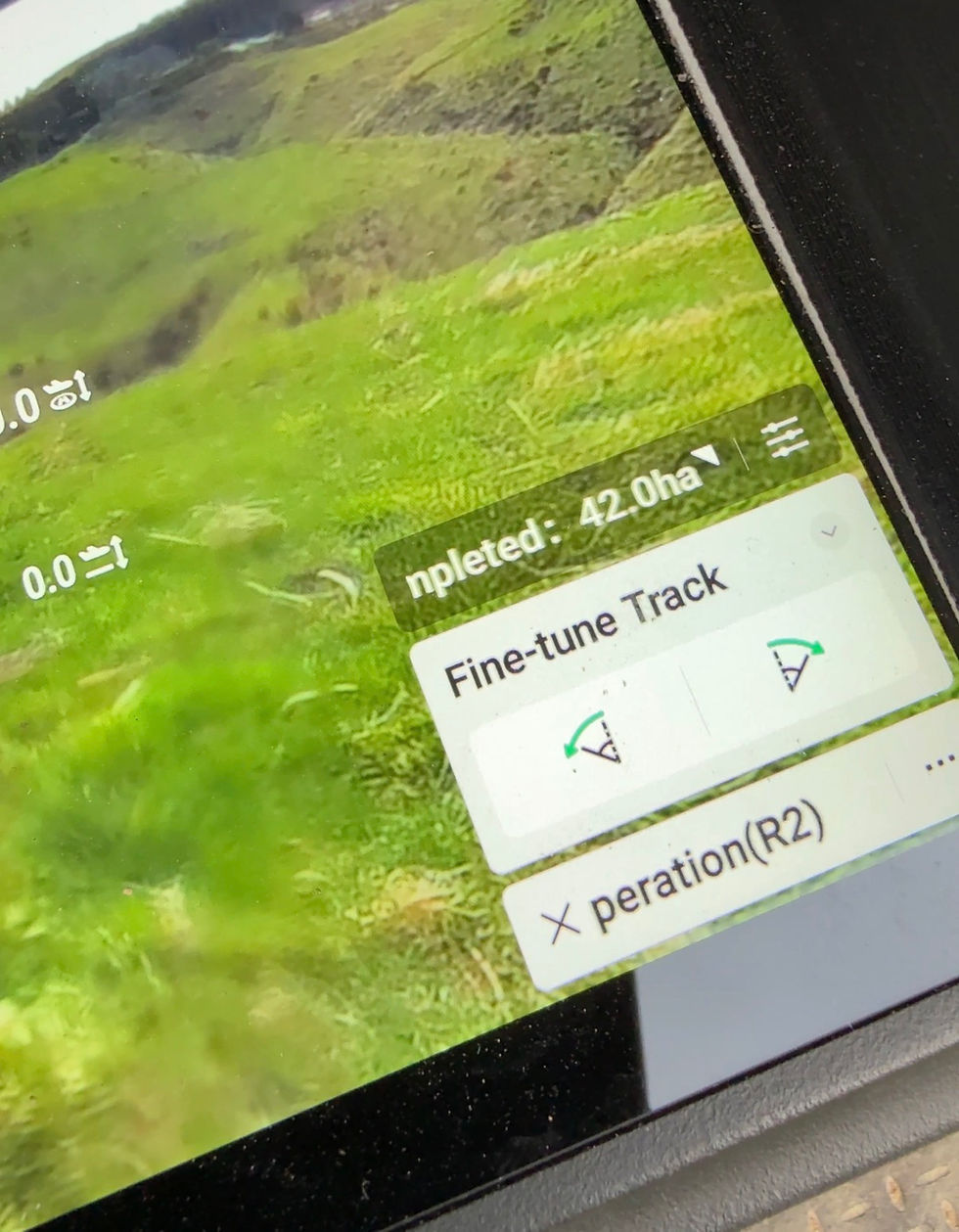
One of the most important developments in uav spraying technology trends is the improvement in navigation systems. Modern agricultural drones can hold lines more accurately, manage turns more cleanly, and maintain more consistent height over uneven ground. That matters because many rural spray jobs are not on flat, open paddocks. They are on rolling country, stop-start boundaries, drains, gullies, race edges, orchards, forestry margins, and broken terrain where consistency is harder to achieve.
Terrain following is especially useful on steep or irregular land. When the aircraft can adjust more effectively to the ground beneath it, the operator has a better chance of maintaining consistent coverage across the target area. It still depends on site conditions, vegetation type, and weather, but the practical result is better control over difficult ground.
This is one reason drone spraying is being used more often on sites where tractors, utes with spray rigs, or manual hose work are either slow or unsafe. It is not just about access. It is about maintaining workable accuracy once access becomes awkward.
Smarter mapping before the job starts
Another strong trend is the growing role of mapping in planning spray and spreading jobs. Better mapping means operators can assess boundaries, identify hazards, mark exclusion zones, and plan flight paths before product is loaded. That improves efficiency on the day and reduces guesswork in the paddock.
For orchard blocks, shelterbelts, riparian margins, and spot-spraying work, mapping helps define exactly where the job starts and stops. On larger or more complex sites, it can also help break the work into manageable sections. This matters when weather windows are tight or when multiple hazards need to be worked around.
In places like the Bay of Plenty and Waikato, where land use can change quickly from pasture to orchard to bush edge to wet ground, pre-planning has real value. Good mapping does not replace field experience, but it helps turn that experience into a cleaner, more efficient job plan.
Application systems are getting more refined
Spray drone development has moved well beyond simply carrying liquid and flying a pre-set route. The better systems now focus on application control - how product is delivered, how evenly it is distributed, and how well the aircraft adapts to changes in speed, direction, and terrain.
That does not mean every job becomes simple. Vegetation density, canopy structure, wind, humidity, slope, and target species still affect results. But more refined application systems give operators better tools to work with. For clients, the practical benefit is a more controlled operation, especially on tricky sites where over-application, misses, or uneven coverage can become expensive.
The same pattern is showing up in spreading work. Drones used for granules, fertiliser, or pasture seed are improving in flow control and delivery consistency. Again, it depends on product type and site conditions, but the trend is clear - more precision, less rough estimation.
Safety is becoming a bigger part of the value proposition
Early conversations about spray drones often focused on speed. Speed still matters, but safety is becoming just as important. That includes reducing the need for operators to walk steep faces with a knapsack, limiting exposure when working around dense weed growth, and avoiding machinery on wet or unstable ground.
For many properties, this is where drone application makes the most sense. If the site is hard to reach, slippery underfoot, too soft for wheels, or risky for manual crews, a drone can reduce some of the obvious access issues. It does not remove risk altogether, and it still needs proper planning and compliance, but it can shift the job into a safer operating model.
This is particularly relevant for pest plant control in wetlands, gullies, drains, and rough margins, as well as roof treatment and awkward commercial sites. The technology trend here is not flashy. It is practical - using aircraft to keep people out of places where the work is harder than it needs to be.
Larger batteries, faster turnaround, but trade-offs remain
Battery performance and charging systems are improving, which helps with job continuity in the field. Less downtime between flights can make a real difference on larger blocks or multi-part jobs. Better power systems also support heavier payloads and more consistent performance through the workday.
Still, battery improvements do not magically erase all limits. Payload, weather, travel time between sections, refill logistics, and site access still affect productivity. On broad, open country, other methods may still be more suitable. On smaller, steeper, wetter, or more fragmented sites, the drone often starts to make more sense.
That is the pattern across most uav spraying technology trends - the technology is improving, but method selection still depends on the job. Good operators know where drones fit well and where another approach may be more practical.
Records, compliance, and client expectations
As drone spraying becomes more established, clients are expecting a more professional standard of planning, record-keeping, and reporting. That is especially true for councils, commercial property managers, forestry clients, and organisations working on sensitive land.
This trend is a good one. Clear records support job verification, future planning, and consistent communication between contractor and client. They also help when managing repeat work across the same site over time. For landowners, it means less reliance on rough descriptions like near the back fence or around the wet patch by the drain.
Professionalism matters just as much as the aircraft itself. A capable drone is only part of the picture. The operator still needs practical spraying knowledge, site awareness, and a clear understanding of how to plan work safely and efficiently.
What these trends mean for landowners and managers
The real takeaway is that drone spraying is becoming more useful because it is getting more precise, more predictable, and easier to apply to specific field problems. That is different from saying it suits every property or every treatment. It does not.
Where it tends to stand out is on land that is awkward, steep, wet, sensitive, fragmented, or inefficient for conventional gear. It can also be a strong option where targeted application is more valuable than covering a whole area with a broad brush. For orchard rows, forestry edges, weed patches, drains, roof areas, and lifestyle blocks with poor access, those advantages are becoming easier to quantify.
For a contractor working in real conditions across the Bay of Plenty and Waikato, the technology only matters if it delivers practical outcomes on the ground. That is where businesses like Agrodrone fit - combining GPS-guided aircraft with field experience to handle jobs that are difficult to do well with standard methods.
The next few years will not be defined by drones replacing everything else. They will be defined by better decision-making about when drone spraying is the right tool, and by steadily improving technology that makes those jobs safer, tidier, and more efficient to complete. If you manage land that regularly creates access or application problems, that is the trend worth paying attention to.


Comments