

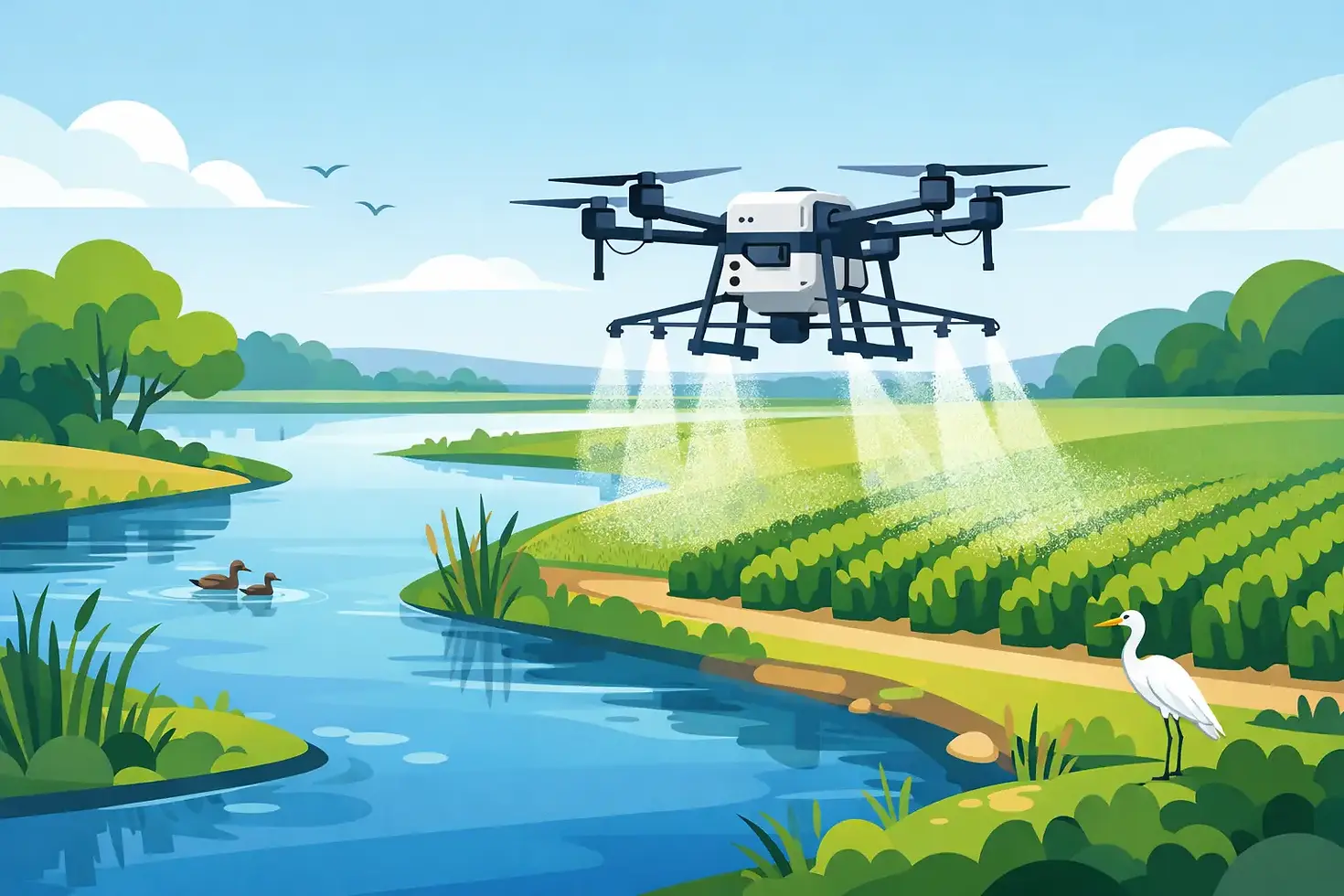
Drone Spraying Around Waterways Done Right
A drain edge that is too soft for a tractor, a steep bank dropping into a stream, a weed line running beside a farm race - these are the jobs where drone spraying around waterways quickly stops being a nice idea and becomes the practical option. The challenge is not just reaching the area. It is treating it accurately, with the right product, at the right rate, while managing drift, runoff risk and compliance obligations.
For landowners and managers across Bay of Plenty and Waikato, waterways create a real operational constraint. Ground rigs can bog, damage margins or leave untreated patches. Manual spraying is slow, labour-heavy and exposes staff to more chemical handling. Helicopters can cover ground quickly, but they are not always the right fit for smaller blocks, sensitive edges or targeted work. A spray drone sits in the middle - precise enough for detail work, fast enough to make difficult areas economical, and controlled enough to reduce off-target application when conditions are right.
Why drone spraying around waterways needs a different approach
Waterways are not just another spray boundary. They are sensitive zones where poor application decisions can create environmental harm, compliance issues and wasted spend. The margin for error is smaller, especially around open drains, streams, ponds, riparian planting and culverts where wind direction, canopy cover and bank shape all affect where droplets end up.
That is why drone spraying around waterways should never be treated as a simple substitute for broadacre spraying. The operator needs to account for buffer requirements, label directions, weather conditions, terrain and the type of vegetation being targeted. A soft rush infestation on a drain edge, for example, calls for a different application strategy than spot spraying willow regrowth above a creek line or suppressing weeds along a stormwater channel on a commercial site.
The main advantage of a drone is control. Flight paths can be planned to match the shape of the area instead of forcing a machine through it. Application rates can be adjusted for density and target size. The aircraft can work from above awkward terrain without wheels entering wet ground or spray operators walking unstable banks.
Where spray drones make the biggest difference
The strongest use case is where access and accuracy matter at the same time. That includes steep gullies, stopbanks, dam edges, riparian margins, drains beside orchards, retention ponds, farm waterways and council-managed vegetation corridors.
In these areas, conventional machinery often creates its own problems. A tractor may not safely reach the edge. A knapsack team may be able to get in, but coverage is slower and consistency depends heavily on the operator. If the site is spread out over multiple small hotspots, mobilisation becomes a major part of the cost.
A drone can lift off close to the work area, treat only the affected zones and move between sections quickly. That makes it well suited to spot-spraying pest plants, maintaining inaccessible margins and dealing with recurring problem areas before they spread further.
There is also a safety benefit that matters in the real world. Less foot traffic on slippery banks, less need to carry spray packs through rough country, and less operator exposure during application all reduce the practical risks around the job.
Precision matters more than speed
Speed is one reason clients look at UAV application, but around waterways precision is the bigger story. Saving time only helps if the job is done properly.
Modern spray drones can apply product at controlled rates with consistent swath width and stable low-altitude flight. That gives the operator a better chance of keeping spray on target, particularly on narrow strips and irregular edges. Variable-rate capability also helps where vegetation pressure changes across the site. Dense weed patches may need a different treatment than sparse regrowth, and there is no value in overapplying chemical to clean ground.
This is where drones can reduce waste as well as labour. Instead of blanket spraying a wider area because that is what the machinery allows, the treatment can be matched more closely to the problem. Less chemical use is not guaranteed in every job - some dense infestations still need strong coverage - but targeted application usually improves overall efficiency.
Drift, runoff and compliance
Any conversation about spraying near water has to start with drift control and environmental protection. The technology helps, but the equipment alone does not make the job compliant. Operator judgement, planning and timing are what separate a safe operation from a risky one.
Wind speed and direction are obvious factors, but they are not the only ones. Temperature, humidity, nearby shelterbelts, bank contour and the presence of standing water all affect how a spray behaves. Some sites can be sprayed safely for a short window in the morning and not at all in the afternoon. Others may need a change in nozzle setup, droplet size or flight direction to reduce drift potential.
Product choice matters just as much. Labels, environmental restrictions and buffer requirements must be checked before any work begins. Some treatments may be suitable beside a waterway under strict conditions. Others may not be appropriate at all. The right contractor will say no when the product, weather or site setup does not support a safe application.
That is also why certified operators matter. Around waterways, the client is not just buying aircraft time. They are buying a service that understands aviation rules, agrichemical handling, and how to apply product without creating an avoidable problem downstream.
Planning a waterway spray job properly
Most issues around waterway spraying come from poor planning rather than poor equipment. A good operation starts with a clear understanding of the target species, the site layout and the treatment goal.
If the objective is knockdown of annual weeds on a drain shoulder, the plan will be different from long-term control of gorse on a steep watercourse margin. The operator needs to know where the water sits in relation to the target, how dense the vegetation is, whether access for support vehicles is available, and what conditions are likely on the day.
This planning stage also helps determine whether drone application is the best fit. In many cases it is. In some cases, a ground crew for hand spot treatment may be better for very small scattered areas, or a wider aerial method may make more sense for large remote blocks. Good advice is not about pushing one tool into every job. It is about choosing the method that gives the safest and most cost-effective result.
What clients should look for in a contractor
Around waterways, experience and credentials are not optional extras. Clients should expect a contractor to work with documented processes, suitable insurance, and the right aviation and chemical handling certifications. They should also be able to explain how they manage drift risk, assess weather windows and adjust application rates to match the site.
It helps if the contractor understands the realities of regional work as well. Farms, orchards, councils and commercial properties often need flexibility. One week the job is a small drain clean-up billed by the hour. The next it is a larger vegetation management programme priced per hectare. The service needs to scale without losing control over application quality.
Agrodrone works in exactly this space - using precision UAV spraying to treat difficult or sensitive areas where safety, accuracy and turnaround all matter.
When drone spraying around waterways is the best option
Drone spraying around waterways is usually the best option when the ground is unsafe or inaccessible, when only specific areas need treatment, or when drift control has to be tighter than a broader application method can reasonably deliver. It is especially useful on steep country, soft margins, narrow corridors and sites where repeated maintenance is needed.
It is not magic, and it is not one-size-fits-all. The result still depends on weather, product selection, vegetation type and operator skill. But when those pieces are handled properly, UAV spraying gives landowners and asset managers a practical way to stay on top of weed pressure near sensitive areas without sending people or machinery where they should not be.
If you are dealing with drains, stream edges, riparian margins or awkward banks, the right question is not whether a drone is new technology. It is whether the job can be done more safely, accurately and cost-effectively than the methods you are using now.


Comments