


DOC Pest Plant Control on Tough Ground
When DOC pest plant control has to happen on a steep face, around wetlands, or through broken ground, the usual options start to show their limits. Ground crews can be slow and exposed, vehicle access may be poor, and manned aerial work is not always the right fit for smaller or more sensitive areas. That is where drone spraying can make practical sense - not as a replacement for every method, but as a targeted tool for the right sites.
For land managers, councils, conservation teams, and rural property owners, the real question is not whether drones are new technology. It is whether they can help get difficult weed control work done safely, accurately, and without wasting time on access problems. In many cases, the answer is yes, especially where terrain or site conditions turn a simple spray job into a drawn-out operation.
Where doc pest plant control gets difficult
Pest plant work often sounds straightforward until you are standing on the site. A gully may be too wet for machinery. A drain line may run through soft ground that is hard to cross on foot. A hillside may be safe enough for some hand work, but not efficient for covering larger patches. Dense vegetation can also make it difficult to maintain even application when operators are working from the ground.
These are the jobs where efficiency is usually lost first. Crews spend time getting in and out, repositioning gear, and working around hazards rather than treating the target area itself. On conservation land, riparian margins, forestry edges, road reserves, and neglected lifestyle blocks, those delays add up quickly.
Drone spraying changes the access side of the job. Instead of forcing a vehicle or crew through difficult terrain, the aircraft can work above it. That does not remove the need for planning, site assessment, or safe operating procedures, but it can reduce the amount of manual effort needed to reach the problem area in the first place.
Why drone spraying suits some DOC pest plant control work
The main advantage is precision on sites where access is the biggest obstacle. A modern agricultural drone can apply product in a controlled and targeted way across areas that are awkward, uneven, or unsafe for conventional ground equipment. That matters when the goal is to treat the pest plant, not flatten the surrounding area just to get machinery in.
It is also useful where a site is too small or fragmented to justify larger aerial operations. Some pest plant jobs involve scattered infestations across gullies, wet corners, fence lines, drains, or forestry margins. In those cases, a drone can often move from one treatment zone to the next with less setup and less disruption than other options.
There are practical safety benefits as well. Reducing the need for operators to carry spray gear across steep banks, slippery edges, or boggy ground lowers exposure to the physical hazards that often come with weed control. The same applies where dense growth, unstable footing, or difficult approaches make manual work slower and riskier than it first appears.
That said, drone spraying is not a magic fix. It depends on the size of the area, the shape of the site, surrounding vegetation, obstacles, weather conditions, and the wider objectives of the job. Some work is still better handled by ground crews, and some sites need a mixed approach.
DOC pest plant control with less compromise on access
Access is often the hidden cost in pest plant control. A job may look modest on paper, but if the crew spends most of the day walking in, dragging hoses, or working around terrain that limits movement, the treatment becomes expensive in time and effort.
This is where drones can offer a more practical path. They are particularly suited to steep embankments, wetland margins, rough pasture edges, scrubby blocks, and hard-to-reach sections where tyres, tracks, or boots are the real constraint. The benefit is not just speed. It is being able to treat the area with less disturbance and more consistency than a difficult ground operation can often deliver.
For councils and conservation projects, this can also help when sites are sensitive and the work needs to be carried out with care. For private landowners, it can be a useful option when pest plants are spreading in places that have become too hard to manage with a knapsack and too awkward for larger machinery.
What a well-planned drone job actually looks like
Good aerial application starts before the drone leaves the ground. Site conditions need to be assessed properly, including terrain, vegetation density, obstacles, surrounding land use, and practical access for loading and operation. The aim is to match the method to the site, not force the site to suit the method.
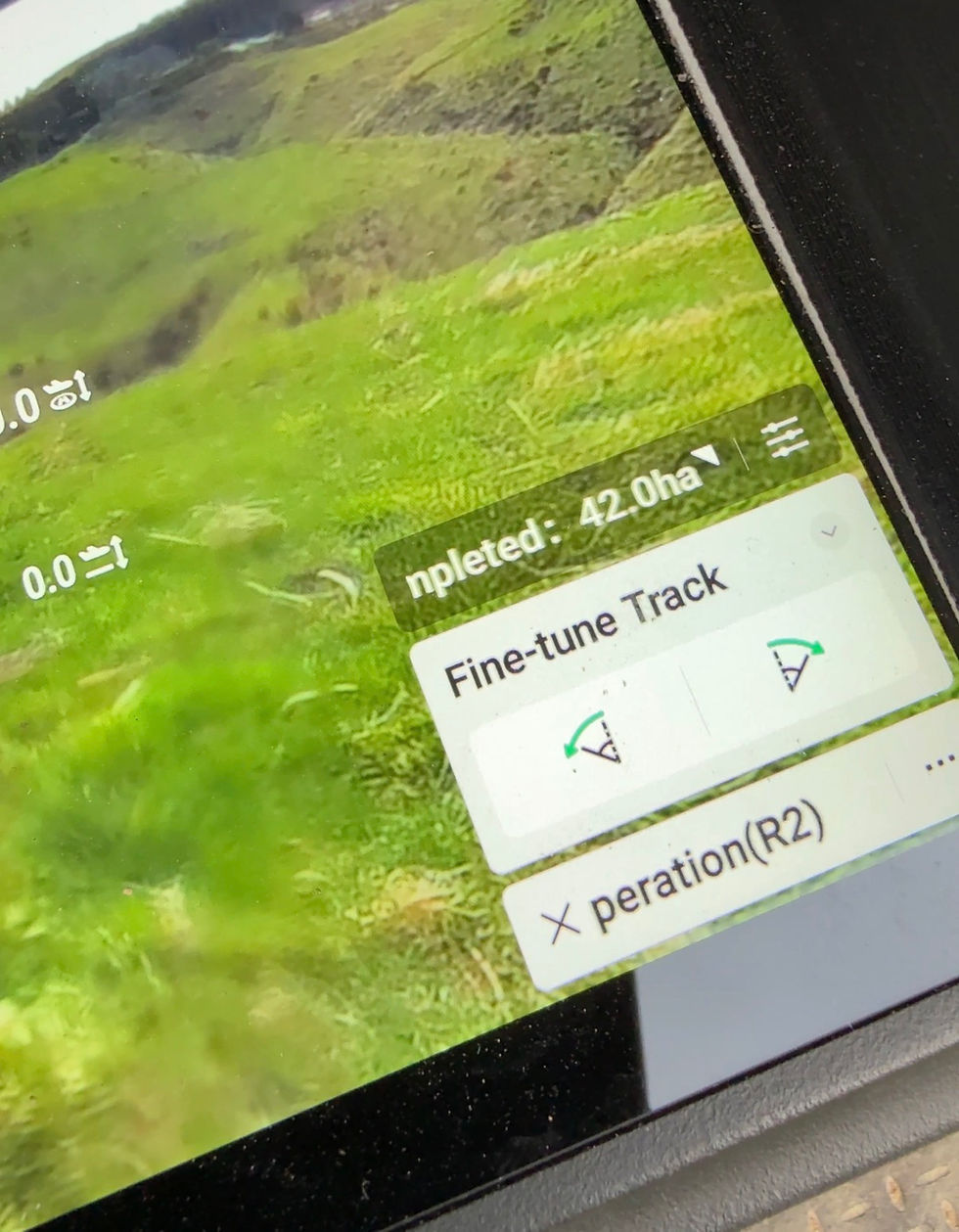
From there, GPS-guided flight planning helps the operator apply product evenly across the treatment zone. On irregular terrain, that level of control can make a real difference. It supports more consistent coverage and reduces the guesswork that often creeps into hand spraying across broken country.
The other part people often overlook is logistics. Drone work can be efficient because it cuts down on the unproductive parts of the day - less time pushing through scrub, less time repositioning on unstable ground, and less reliance on tracks or vehicle access that may not exist. For smaller blocks and awkward corners, that practical efficiency is often the reason clients make the switch.
Where drones fit best - and where they do not
Drone spraying tends to perform best on sites with one or more of the following issues: steepness, wet ground, patchy infestations, limited access, sensitive surroundings, or hazards that make manual application less attractive. Wetland pest plant control is an obvious example, but the same logic applies on forestry blocks, shelterbelt edges, roadside margins, stormwater areas, and rough rural land.
It can also be a strong fit on lifestyle blocks, where owners often have recurring weed problems in gullies, drain edges, pond margins, or overgrown corners that standard spray gear cannot reach easily. These jobs are often too technical or too awkward to keep putting off, but not always large enough for traditional aerial work.
Where drone spraying may be less suitable is on open, flat ground that is already easy to access with a conventional sprayer. If a tractor can do the work safely and efficiently, that may still be the better option. The same applies if the site has overhead constraints, poor operating space, or conditions that make flying impractical on the day. The right method depends on the job in front of you.
Practical outcomes matter more than the technology
Most clients are not looking for a drone because it sounds modern. They are looking for a way to get pest plant work done without the delays, labour strain, and access issues that come with difficult sites. The value is in the result - accurate application, safer operations, and better use of the available weather window.
That is especially relevant across parts of the Bay of Plenty and Waikato, where land can shift quickly from easy paddock access to steep, wet, cut-up terrain. One property may include drains, gullies, scrub margins, orchard edges, and soft ground all in the same job. A practical contractor needs to understand those conditions and choose an approach that suits the block rather than relying on a one-size-fits-all plan.
For that reason, the best drone spraying work is grounded in field experience as much as technology. GPS guidance and aerial capability are useful, but they only help when paired with sound judgment about site risk, access, and what the land is likely to do underfoot.
If you are planning DOC pest plant control and the main problem is getting to the target area safely and efficiently, it is worth looking at whether drone application is the better fit. Not for every site, and not for every weed problem, but for steep, wet, sensitive, or awkward ground, it can be a very practical way to get the job moving again.


Comments