


How to Seed Steep Paddocks Properly
- michaelvisser66
- Jun 5
- 6 min read
On a steep block, the usual pasture renewal plan can fall apart fast. Tractors lose safe access, spread patterns get patchy, and what looked efficient on flatter ground turns into wasted seed, lost time, and avoidable risk. If you're working out how to seed steep paddocks, the method matters just as much as the seed mix.
How to seed steep paddocks without losing seed and time
Steep paddocks need a different approach because gravity, runoff, wind exposure, and machinery limits all work against even establishment. The goal is not simply to get seed on the ground. It is to get enough viable seed into the right place, at the right time, with enough soil contact and follow-up conditions to give the new pasture a proper start.
On easier country, you can often cultivate, drill, roll, and tidy up weak spots later. On hills, every pass is harder, more expensive, and in some cases unsafe. That is why oversowing by air has become a practical option for many landowners across Bay of Plenty and Waikato, especially where conventional gear cannot operate efficiently.
The first decision is whether the paddock needs full renewal or improvement. If there is still a usable pasture base, oversowing can lift production without the cost and disruption of starting again. If the sward is badly run out, heavily weed-infested, or damaged by pugging and erosion, a more complete programme may be needed. The right answer depends on slope, existing species, soil condition, and how much grazing pressure you can control during establishment.
Start with paddock condition, not just seed choice
A common mistake on hill country is focusing on the seed blend before sorting the site conditions. Seed cannot compensate for compacted ground, aggressive weeds, low fertility, or poor timing.
Walk the paddock and check what is already there. If there is useful cover, oversowing into an existing pasture can work well, particularly after grazing down hard to open up the canopy. If there is too much dead matter, seed may sit in trash instead of reaching the soil. In those cases, managing grazing pressure before application is one of the cheapest ways to improve strike.
Weed pressure needs attention early. Broadleaf weeds, rushes, and woody species can outcompete emerging pasture before it gets established. On steep country, spot treatment or targeted aerial spraying may be the safest way to deal with problem areas without putting people or machinery in risky positions. The sequence matters. Spraying too close to seeding can leave bare ground vulnerable to erosion, while sowing into active weed competition reduces establishment.
Soil fertility also deserves a reality check. If phosphorus, sulphur, potassium, or pH are limiting, your new pasture may germinate and then stall. That is especially costly on steep paddocks, where rework is harder. A soil test gives you a better basis for deciding whether seed alone is enough or whether fertiliser needs to be part of the programme.
Timing is a bigger lever than most people think
If you want to know how to seed steep paddocks successfully, timing sits near the top of the list. On hills, moisture is often the make-or-break factor.
Autumn is usually the strongest window for oversowing because soil temperatures are still workable and follow-up moisture is more reliable. Seed has a better chance to germinate before summer stress returns. Spring can also work, but it is more variable. A warm spring with decent rain can deliver a good result. A drying wind pattern can undo it quickly, particularly on north-facing slopes.
The ideal timing depends on aspect, altitude, local rainfall pattern, and stock management. South-facing faces tend to hold moisture longer. Exposed ridgelines dry out faster and may need tighter timing around a weather event. Broadcasting seed just before useful rain is often far more effective than simply sticking to a date on the calendar.
That is one reason aerial application is attractive on steep country. When conditions line up, you can move quickly instead of waiting for ground access to improve or trying to force machinery into paddocks that are too wet or too risky.
Choose seed for the block, not the brochure
Steep paddocks often vary more within one block than flatter land does across several. Sunny faces, shaded gullies, lighter soils, and wetter toes all behave differently. A seed mix that performs well on one slope may struggle on the next.
Perennial ryegrass and clover remain a standard base for many pasture systems, but they are not always the full answer on hill country. Tall fescue, cocksfoot, plantain, and other species can have a place where drought tolerance, persistence, or lower fertility performance matters. The right mix depends on your stocking system, grazing intensity, rainfall, and whether the paddock is being renewed for production, erosion resilience, or both.
There is a trade-off here. More specialised mixes can improve persistence in difficult conditions, but they may cost more and need better grazing management. A cheaper blend may reduce upfront cost but underperform on exposed slopes. The best result usually comes from matching species to the site rather than treating the whole farm the same.
Why aerial seeding suits steep paddocks
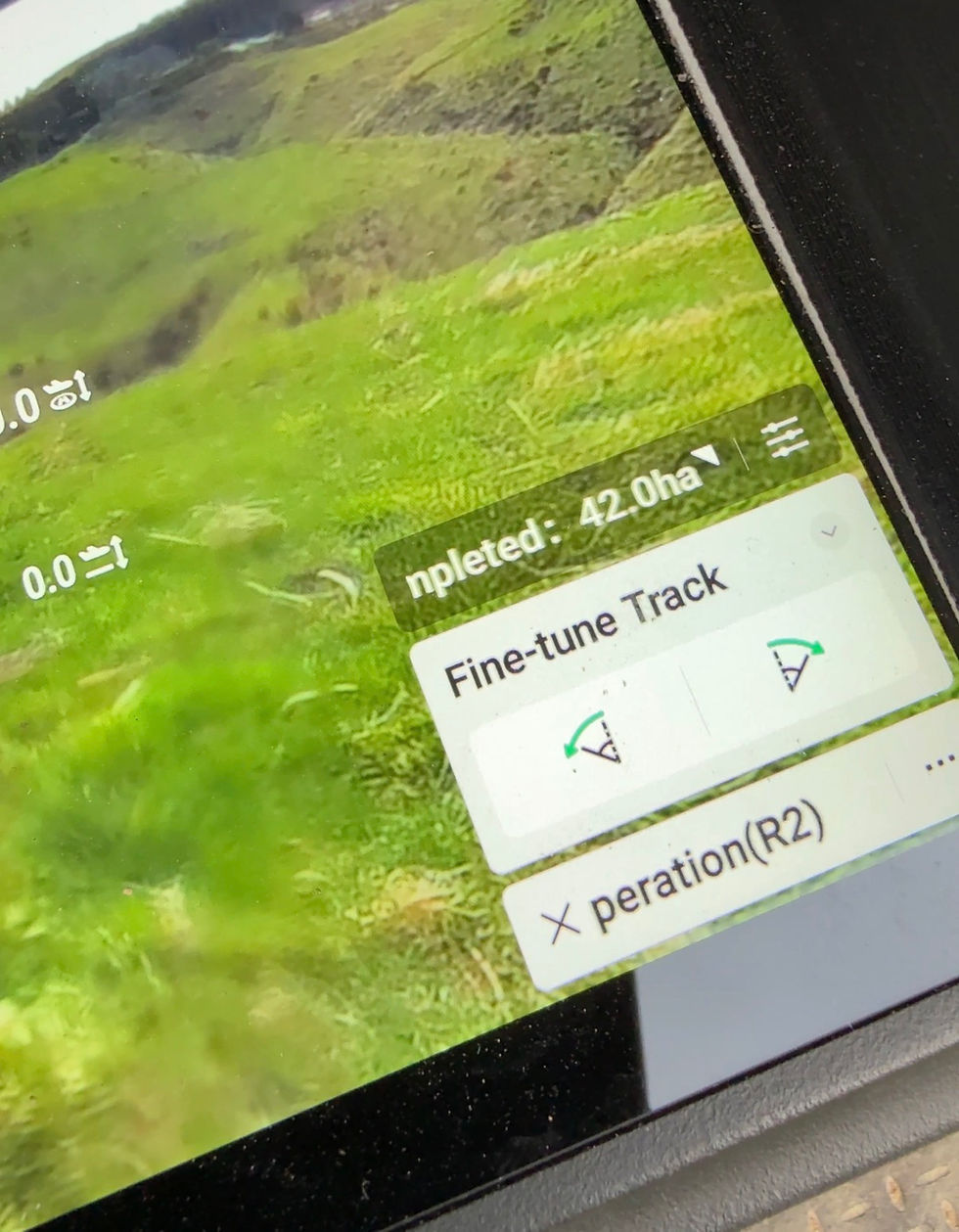
The practical challenge with steep country is getting accurate coverage without creating new problems. Ground spreading can be slow and inconsistent on slopes, and in some paddocks it is simply not safe. Helicopters have long been used for hill country work, but drone application is now giving landowners a more precise option for smaller areas, awkward terrain, and jobs that need tight control.
For steep paddocks, drone seeding helps solve three common issues. First, it removes the need to put tractors or spreaders on unsafe ground. Second, it allows controlled application across irregular shapes, gullies, and faces that are difficult to treat evenly from the ground. Third, it can reduce waste by applying seed where it is needed instead of over-treating margins, tracks, and non-productive edges.
This matters most where access is the real bottleneck. If the paddock is too steep for routine machinery, then a precise aerial option can save time and reduce operator exposure while still getting the job done inside a useful weather window.
Getting better establishment after seeding
Putting seed out is only half the job. What happens in the next six to eight weeks often decides whether the paddock improves or needs doing again.
Grazing control is critical. Newly sown areas need enough time to establish roots before stock pressure returns. On steep country, that can be harder to manage because mobs move unevenly and animals favour certain faces. If the paddock cannot be spelled properly, establishment rates will usually suffer.
Watch for runoff after heavy rain. On very steep or bare country, intense rainfall can shift seed downslope before it gets a foothold. That risk is lower when there is existing ground cover and the timing is matched to softer rain rather than a major event. This is another reason oversowing into a prepared existing sward often performs better than seeding onto exposed soil.
Follow-up fertility can also make a noticeable difference. If the paddock has low nutrient reserves, a combined strategy that includes fertiliser application may support stronger early growth. The exact programme depends on soil test results, species choice, and budget, but ignoring nutrition after seeding is a false economy.
When to bring in a specialist
Some steep paddocks are straightforward. Others are a mix of cliffs, gullies, scrub edges, wet patches, and shifting access. That is where experience matters.
If the area is difficult to reach, unsafe for machinery, or needs a coordinated job involving spraying, seeding, or fertiliser placement, a specialist aerial operator can usually build a cleaner plan than trying to patch it together with multiple passes and improvised access. The benefit is not just convenience. It is a safer, faster, and more controlled outcome on terrain that can punish poor decisions.
For landowners in Bay of Plenty and Waikato, that often means looking at certified drone application where the block size, shape, and access suit it. Agrodrone works in exactly these conditions, helping clients treat difficult country with more precision and less ground risk than traditional methods allow.
Steep paddocks rarely reward shortcuts. If you match the seed mix to the site, line up application with moisture, and use a method that suits the terrain, establishment becomes far more predictable. Good hill country work is usually less about doing more and more about doing the right things in the right order.


Comments