

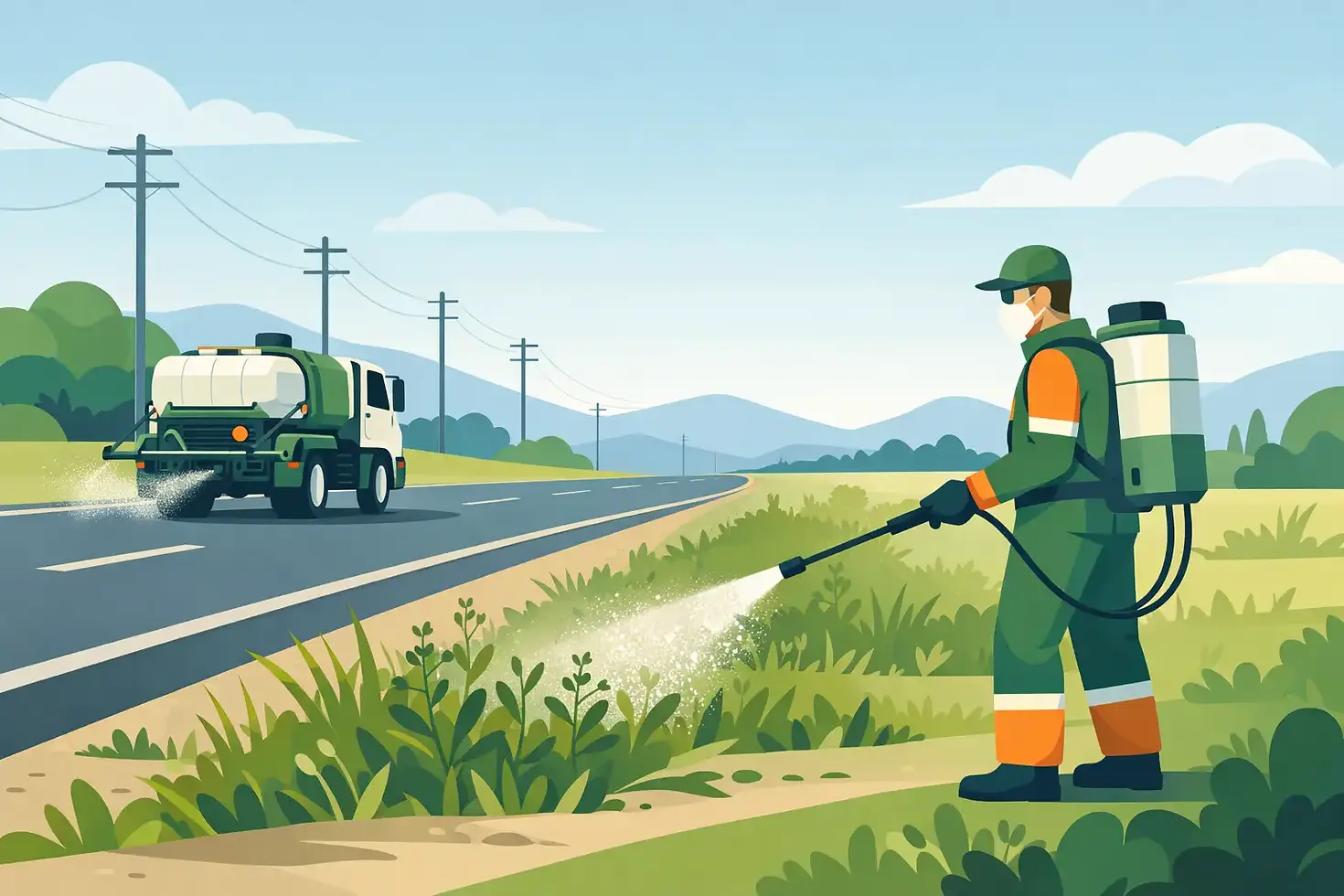
Roadside Weed Spraying Service That Works
- michaelvisser66
- Jun 1
- 6 min read
Roadside vegetation gets expensive when it is left too long. What starts as light growth on a verge or bank can quickly turn into obstructed sightlines, blocked drains, pest plant spread, and a bigger maintenance job than it needed to be. A reliable roadside weed spraying service is not just about keeping edges tidy. It is about safety, compliance, access, and getting control of problem areas before they spread.
For councils, contractors, rural property owners and organisations managing roadside assets, the main challenge is rarely deciding whether weeds need treatment. It is deciding how to treat them safely and efficiently across uneven ground, narrow shoulders, drains, batters, fence lines and areas where conventional equipment is slow or impractical. That is where aerial precision changes the job.
What a roadside weed spraying service needs to do well
Roadside spraying is not the same as broadacre pasture work. The target area is often linear, fragmented and close to sensitive zones such as waterways, neighbouring paddocks, orchard boundaries, footpaths, traffic corridors and public access areas. That means accuracy matters more than volume.
A good roadside weed spraying service needs to do three things well. It needs to hit the target weed species consistently, limit off-target drift, and complete the work with minimal disruption to road users and surrounding land. If one of those fails, the job can become costly very quickly.
This is why more land managers are moving away from relying only on hand crews or tractor-based booms for every roadside task. Ground methods still have their place, especially on flat, open sections with easy access. But on steep margins, wet edges, deep drains and awkward road reserves, they can be slow, risky and labour-heavy.
Where drone spraying makes the biggest difference
Drone application is especially useful where access is the main constraint. Roadside environments often include rough shoulders, soft ground, hidden obstacles, culverts, embankments and narrow working spaces. Getting a tractor or ute-mounted setup into those areas can be difficult, and in some cases it is not worth the risk to staff or equipment.
A drone can treat these areas without driving over vulnerable ground or putting operators on unstable banks with hose packs. That reduces physical exposure for staff and avoids the damage that heavier machinery can cause on wet verges or sensitive surfaces.
It also saves time in jobs where the treatment area is spread across multiple small sections. Instead of repositioning ground gear constantly, a drone can move quickly between hotspots and apply product only where it is needed. For roadside maintenance programmes, that can make a real difference to labour hours and turnaround.
Precision matters on road verges and banks
The value of a drone is not simply that it flies. The value is in controlled application. Modern UAV spray systems can be calibrated for specific droplet sizes, flow rates and treatment zones, which helps improve coverage while reducing waste.
That is important on roadside sites where the margin for error is small. You may be treating weeds on one side of a fence with desirable pasture, crops or ornamentals on the other. You may be working near drains or around planted areas where over-application creates unnecessary risk. A more precise approach helps keep chemical where it belongs.
Variable-rate capability can also be useful where vegetation density changes along the route. Some sections may need a targeted spot spray, while others need a broader pass over heavy infestation. Applying the same rate across every metre is simple, but it is not always cost-effective.
Safety is not a side issue
Roadside spraying brings together chemicals, moving traffic, variable terrain and public visibility. That makes safety planning central to the job.
A professional operator should be able to manage both aviation and chemical handling requirements, with the right certifications, operating procedures and insurance in place. That matters for councils and commercial clients, but it matters just as much for private landowners who do not want avoidable liability on their boundary lines or access roads.
Using drones can reduce operator exposure because staff are not walking long distances through sprayed vegetation or working directly on steep faces with spray packs. It can also reduce the need to place machinery in hazardous positions beside drains, drop-offs or soft shoulders. That does not remove risk entirely, but it does shift the job toward a safer operating model when the site suits aerial treatment.
Traffic management still needs consideration, of course. Some roadside sites can be treated with very little disruption. Others need tighter controls depending on road type, visibility and work zone layout. The practical answer always depends on location.
Not every roadside weed problem is the same
One of the biggest mistakes in roadside vegetation control is treating every job as if it has the same objective. Sometimes the goal is broad suppression along a road reserve. Sometimes it is selective control of gorse, blackberry or other invasive species on a bank. Sometimes it is knockdown around infrastructure, fence lines, culverts or signage.
The treatment method, product choice and timing should follow the actual weed problem, not just the map boundary.
Seasonality matters as well. Spray too early and you may get weak uptake. Leave it too late and the weed mass may be harder to control, with more follow-up required. Weather windows also matter more than many people expect. Wind, temperature and nearby sensitive areas all affect whether a site is ready to spray on a given day.
That is one reason an operationally focused contractor adds value. The job is not just turning up with equipment. It is assessing whether the site, timing and application plan line up to produce a result worth paying for.
Cost is more than the spray bill
When people compare a drone-based roadside weed spraying service with traditional methods, they often start with the hourly or per-hectare rate. That is reasonable, but it is not the full picture.
The real cost includes labour, setup time, vehicle access, repeat visits, missed patches, off-target damage and delays caused by terrain. A lower upfront rate can become an expensive job if crews lose hours accessing awkward strips or if poor coverage leads to retreatment.
Drone spraying tends to be most cost-effective where the site is difficult, fragmented or unsafe for standard machinery, and where targeted application can reduce chemical use. On large, flat and easily accessible roadside sections, conventional ground spraying may still stack up well. The right method depends on the site shape, risk profile and treatment objective.
That is the practical view. There is no single best method for every roadside corridor. There is only the method that gives the best outcome for that particular section of work.
What to look for in a contractor
If you are sourcing a roadside weed spraying service, capability matters more than broad claims. Ask how the contractor handles drift management, calibration, site assessment, weather decisions and record keeping. Ask whether they are set up for spot-spraying, linear treatment, or larger vegetation control programmes. Make sure they understand the difference.
You also want to know they can work across the sort of terrain you actually manage. Roadside work in Bay of Plenty and Waikato can include rolling paddock edges, steep cuttings, drains, industrial verges, orchard boundaries and remote access tracks. The operator needs to be ready for those conditions, not just ideal paddocks on a calm day.
Agrodrone works with rural and commercial clients who need spraying done accurately in places that are awkward, steep or inefficient to treat from the ground. The value is straightforward - safer access, faster treatment and less waste where precision matters.
A better approach for ongoing roadside maintenance
Roadside weed control works best when it is planned, not reactive. Once invasive growth gets ahead of the maintenance cycle, every job becomes harder. Visibility drops, seed spread increases and the treatment area expands beyond the original problem.
A responsive service helps, but a scheduled approach is usually better. That may mean seasonal spraying rounds, targeted follow-up on known hotspots, or rapid response after growth surges. The goal is to keep roadside vegetation manageable with fewer surprises and less disruption.
For property owners and asset managers, that usually translates into a simple question: can the contractor treat the right areas at the right time without turning a straightforward job into a drawn-out one? When the answer is yes, roadside spraying stops being a recurring headache and becomes part of routine land management.
If you are looking at banks, drains, verges or hard-to-reach road edges and wondering whether they are worth the hassle, they probably already need attention. The best time to act is before those small strips become a larger problem to control.


Comments