

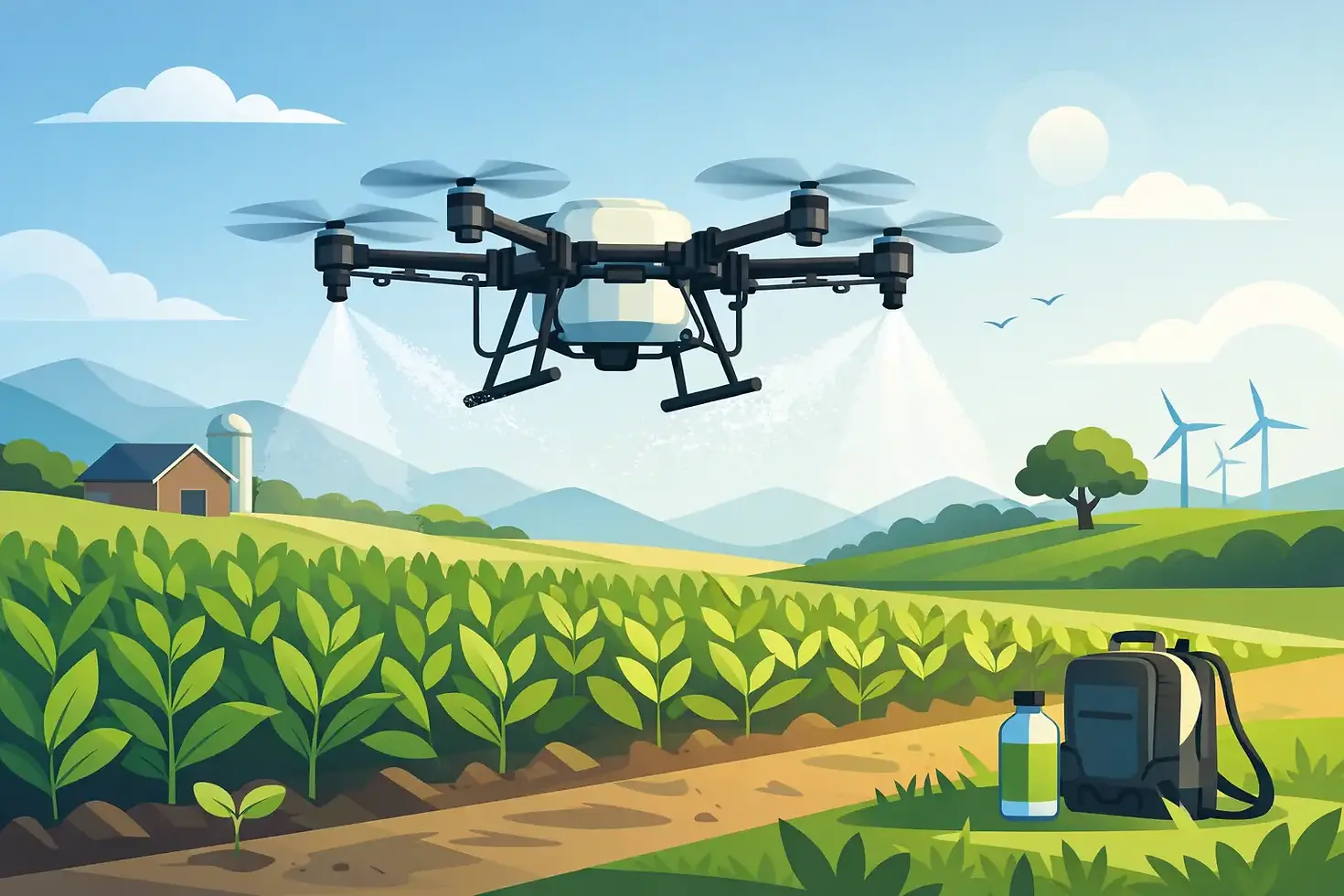
A Practical Guide to Drone Weed Spraying
A boggy gully, a steep face thick with gorse, or a shelter belt line that a boom sprayer cannot reach - this is where a guide to drone weed spraying becomes useful. For many Bay of Plenty and Waikato properties, weed control is not just about choosing the right chemical. It is about getting accurate coverage on the right area, without tearing up ground, exposing staff to unnecessary risk, or losing time waiting for conditions and machinery access to line up.
Drone spraying has moved well beyond novelty. It is now a practical service option for rural landowners, orchard managers, councils, and commercial site operators who need targeted application in places that are awkward, unsafe, or inefficient to treat from the ground. The value is straightforward: faster access, more precise placement, and less waste when the job is planned properly.
What drone weed spraying is good at
Drone weed spraying is best suited to targeted vegetation control where access, terrain, or efficiency are the main problem. That includes gorse, blackberry, ragwort, thistles, pampas, roadside weeds, drain edges, fence lines, orchards, forestry margins, and isolated patches across pasture or lifestyle blocks.
It is especially effective where a tractor risks getting stuck, a ute-mounted sprayer cannot get close enough, or hand spraying would take too long. On hill country, in wet paddocks, around waterways, and on industrial or public sites with obstacles, drones can often do the job with less disruption.
That does not mean drones replace every other spraying method. Broadacre work on flat, open ground can still suit conventional equipment, particularly when high-volume coverage over large areas is required. The right method depends on block size, weed pressure, terrain, product label requirements, and how precise the application needs to be.
Guide to drone weed spraying: how the job works
A good operation starts before the drone leaves the ground. The site needs to be assessed for weed type, treatment area, terrain, nearby sensitive zones, weather conditions, and any hazards such as power lines, stock, buildings, roads, or public access.
Once the target area is confirmed, the operator plans the flight path and application rate to match the job. Modern agricultural drones can apply product with a high degree of control, including variable-rate capability where needed. That matters because blanket spraying often wastes chemical on non-target ground, while under-application can lead to poor control and repeat work.
On site, the drone works low and accurately over the target. Compared with conventional aerial application, the treatment zone is much tighter. Compared with manual spraying, the speed is usually far better. The result is a practical middle ground - accurate enough for sensitive or irregular sites, and efficient enough to make commercial sense.
Where drone spraying saves the most time and money
The biggest savings usually come from reduced labour, less machinery movement, and faster completion on difficult blocks. If a team would otherwise spend half a day walking a steep face with knapsacks, or if a tractor needs repeated passes around awkward contours, a drone can shorten the job significantly.
It also reduces wear on paddocks and access tracks. There is no heavy machine crossing soft ground, no tyre damage in wet areas, and less chance of rutting around gateways, headlands, or orchard rows. For many properties, that matters almost as much as the spray job itself.
Chemical savings can also be real, but they depend on the site and the planning. Precision application helps reduce off-target spraying and overlap, particularly on spot work, fence lines, drains, and scattered infestations. If the block is simple and open, the difference may be smaller. If the site is broken, steep, or irregular, the gain is often much more obvious.
When a drone is the better option than ground spraying
There are a few clear signs that drone spraying is likely to be the better fit. One is poor access. If the treatment zone sits behind gullies, on steep slopes, around ponds, or in areas where vehicles cannot safely enter, drones remove a major operational bottleneck.
Another is safety. Weed spraying around unstable ground, slips, drains, roadsides, rail corridors, industrial yards, or steep banks exposes people to more risk when done manually. A drone reduces the amount of time operators need to spend in the hazard zone and lowers direct chemical exposure during application.
The third is precision. Around shelter belts, orchard boundaries, waterways, public edges, or mixed-use sites, you often need tighter control than broad ground equipment can provide. Drones are not immune to drift - no spraying method is - but the lower flight profile and targeted application can help manage it more effectively when conditions are suitable.
Guide to drone weed spraying for drift and compliance
Drift control is one of the main reasons clients move to drone application, but it should never be treated as automatic. Weather still matters. Wind, temperature, humidity, nearby crops, neighbouring properties, and buffer requirements all affect whether the job should go ahead.
That is why certified operators and proper planning matter. Agricultural drone work needs to be handled by people who understand aviation rules, chemical handling, calibration, and label compliance. The equipment may be modern, but the basics still apply: right product, right rate, right droplet size, right time, and right site.
For councils, public-sector clients, and commercial operators, compliance is not just a paperwork issue. It is about having confidence that the work is insured, documented, and carried out by qualified people who know how to manage operational risk. For farmers and orchardists, it is about protecting stock, crops, water, and neighbour relationships while still getting the weeds under control.
What affects cost
Pricing for drone weed spraying usually comes down to the size of the area, the density of infestation, site complexity, and whether the job is spot spraying or broad treatment. Smaller, irregular jobs are often priced on an hourly basis. Larger programmes tend to suit a per-hectare rate.
Travel, refill logistics, chemical choice, and the number of treatment zones can also affect the final cost. A simple paddock-edge strip is not priced the same way as a scattered set of weed patches across multiple steep gullies. The best way to look at value is not just cost per hectare, but total job efficiency. If drone application cuts labour, avoids ground damage, shortens downtime, and improves targeting, the overall economics can stack up well.
How to prepare a site for drone weed spraying
The smoother the site setup, the faster the work gets done. It helps to identify access points, refill areas, hazards, stock movements, and any no-spray zones before the operator arrives. If the treatment area is part of a wider farm system, it is also worth flagging nearby water sources, sensitive crops, and public access routes.
Clear communication on the weed problem is just as important. Is the goal knockdown, containment, release from competition, or follow-up treatment after previous spraying? A drone can apply accurately, but the outcome still depends on matching the spray plan to the actual weed stage and management objective.
Photos, paddock maps, and area estimates can speed up quoting and planning. So can being realistic about conditions. If a block is too windy, too exposed, or not suitable for the chosen product, a professional operator should say so.
Is drone weed spraying right for your property?
If your weed control problem sits on steep land, wet ground, awkward corners, orchard margins, drains, roadsides, or scattered infestations that waste time with conventional gear, drone spraying is worth serious consideration. It is often safest where access is poor, most efficient where the treatment zone is irregular, and most cost-effective where precision reduces rework and chemical waste.
For open, flat, easy-access paddocks, it may not always be the first choice. That is the point - the best result comes from using the right method for the site, not forcing one method onto every job.
For landowners and managers across Bay of Plenty and Waikato, the practical question is simple: can the weeds be treated more safely, accurately, and efficiently by air than by ground? When the answer is yes, a specialist service such as Agrodrone gives you a way to act quickly without compromising on compliance or control.
Weed pressure does not usually wait for perfect access, perfect ground conditions, or spare labour. The right spray method gives you options, and that can make the difference between a manageable problem and an expensive one.


Comments